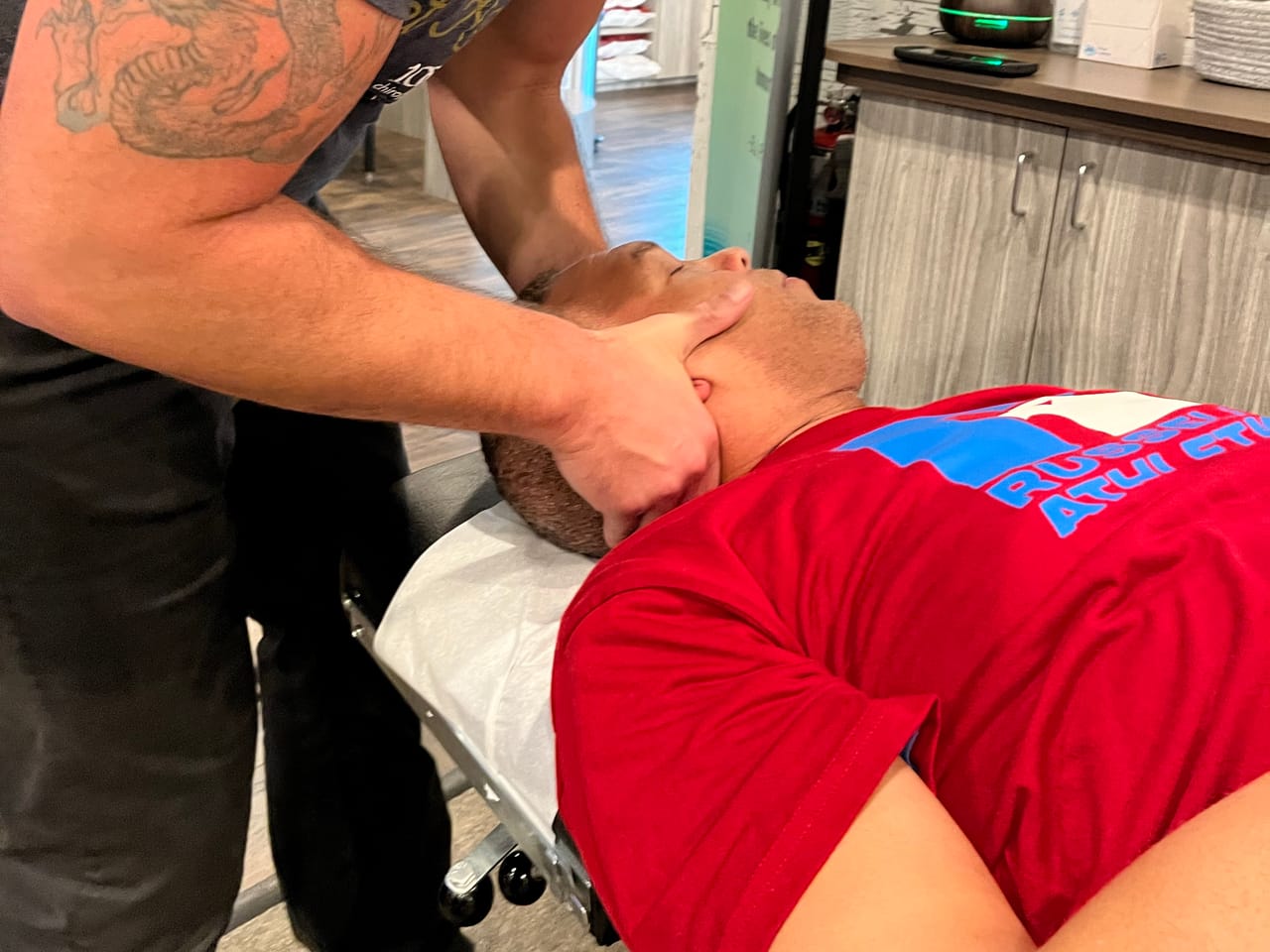
Joint Stiffness and Reduced Mobility in Odessa, FL
Reaching the top shelf, checking your blind spot, and getting up off the floor without planning the route.
Range of motion you have quietly given up on, written off as age.
- 4.9 from 248Google reviews
- Plan and priceIn writing before you commit
- Cash payHSA, FSA and Care Credit
Sound familiar
“I cannot turn or bend like I used to”
8 quick questions about your own week, one at a time, and you get a score out of 100 and one next step. It takes about a minute. Nothing is collected and nothing is sent anywhere.
The part nobody explained
Range you stop using is range you lose, so the stiffness and the avoidance feed each other quietly over years.
Age explains some of it and not all of it, and nobody can tell you which is which without looking at the structure.
Tissue that has been shortened and loaded for a long time needs to be treated as well as mobilized, which is where an adjustment alone tends to plateau.
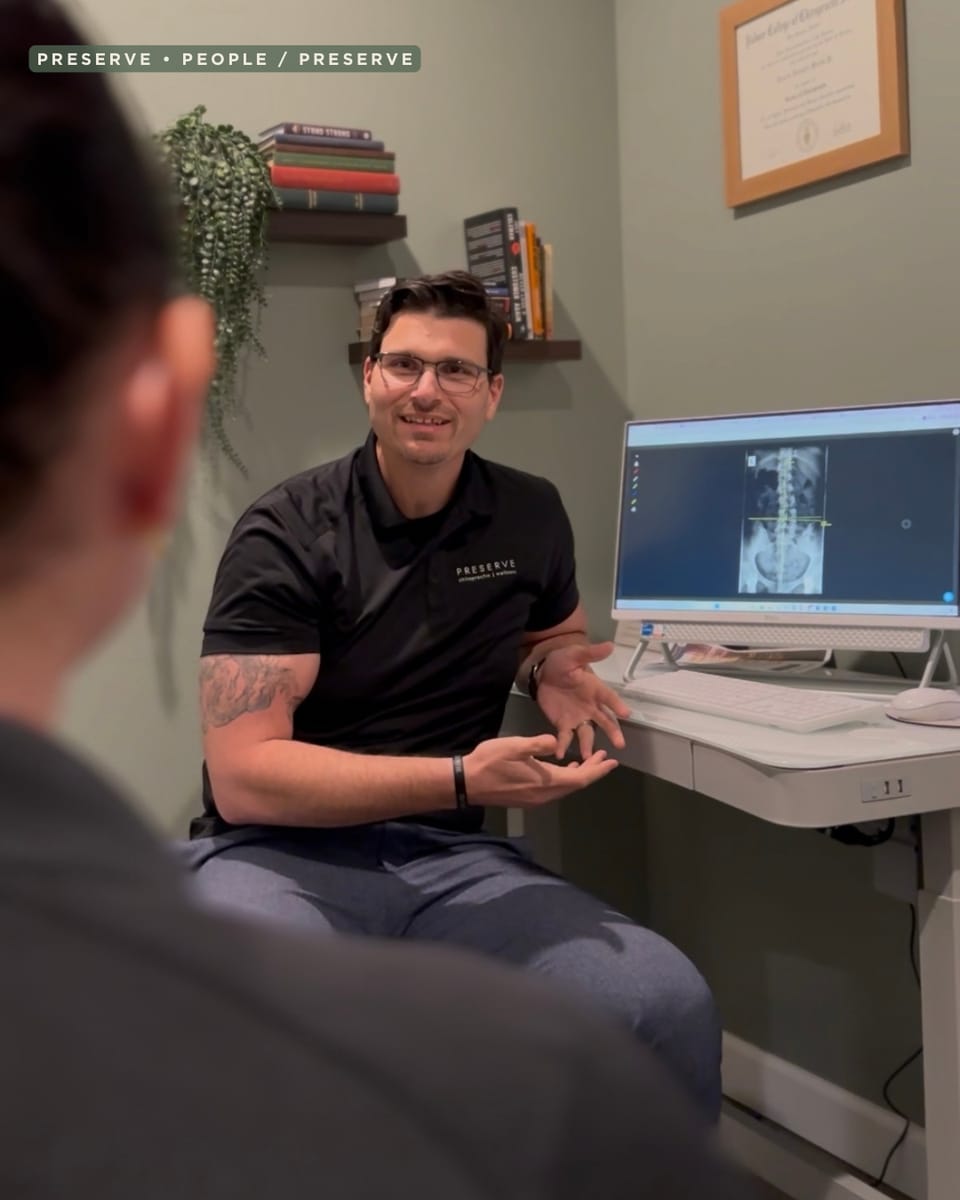
We look before we touch
Digital X-ray on site plus range of motion measured and written down, so the re-exam has something real to compare against rather than a conversation about how it feels.
The first visit is the exam and the digital X-ray. Nothing is adjusted on it, because adjusting before looking is guessing. What the care itself costs is given to you in writing at the report of findings, before you decide.
What we would use on it
Which of these applies to your case comes out of the exam rather than off this page.
- Chiropractic CareRestores the structure and takes pressure off the nervous system.
- Soft Tissue Therapy and Exercise RehabTrains the muscles to hold the correction so you stop relapsing.
- Class IV Laser TherapyCalms the area down so the structural work can hold.
- StemWave TherapyWorks on the tissue itself, which is the part an adjustment alone cannot reach.
Two phases, and you are told which one you are in
Whatever is driving your joint stiffness and reduced mobility, the shape of care here is the same and you are told which phase you are in the whole way through.
- Phase one
Correct what is driving it
Scoped before it starts. You are told how many visits it is built around, what is being measured, and when the re-exam happens, and you get that in writing with the price at the report of findings.
- The exam and the digital X-ray come first, so the plan answers to findings.
- A scheduled re-exam measures it rather than asking how your week went.
- When this phase is finished, you are told that it is finished.
- Phase two
Preserve what has been corrected
A body keeps loading, so a correction is something you keep rather than something you finish. What maintaining it looks like is explained with the reasons on the table, and it is a decision you make knowing what it is for.
- Discussed once the corrective phase is measured, not assumed at the start.
- You know what you are paying for and why, at every point.
- Nobody here will tell you a result holds forever on its own.
What patients said afterwards
The entire staff is so kind, welcoming, and truly cares about their patients.
Gabriela V., WebsiteHands-down best Chiropractic office I've ever been to.
James B., WebsiteFinding this office has been life changing for me.
Krista R., Website
Questions people ask about joint stiffness and reduced mobility
Is this just age?
Some of it usually is. The useful question is how much, and that is answerable from the images and the measurements rather than from a guess. You get the honest split at the report of findings.
How will I know if it actually improved?
Because it is measured. Range of motion is recorded at the start and again at a scheduled re-exam. Measured change is the standard here, not whether you had a good week.
I am in my seventies. Am I too old for this?
Dr. Ron Martin has treated patients from newborns through to their nineties. Whether this is right for you is a question about what the exam shows, not about the number.