A straight answer
Deciding whether this is worth your time and money using facts rather than a sales page.
- 4.9 from 248Google reviews
- Plan and priceIn writing before you commit
- Cash payHSA, FSA and Care Credit
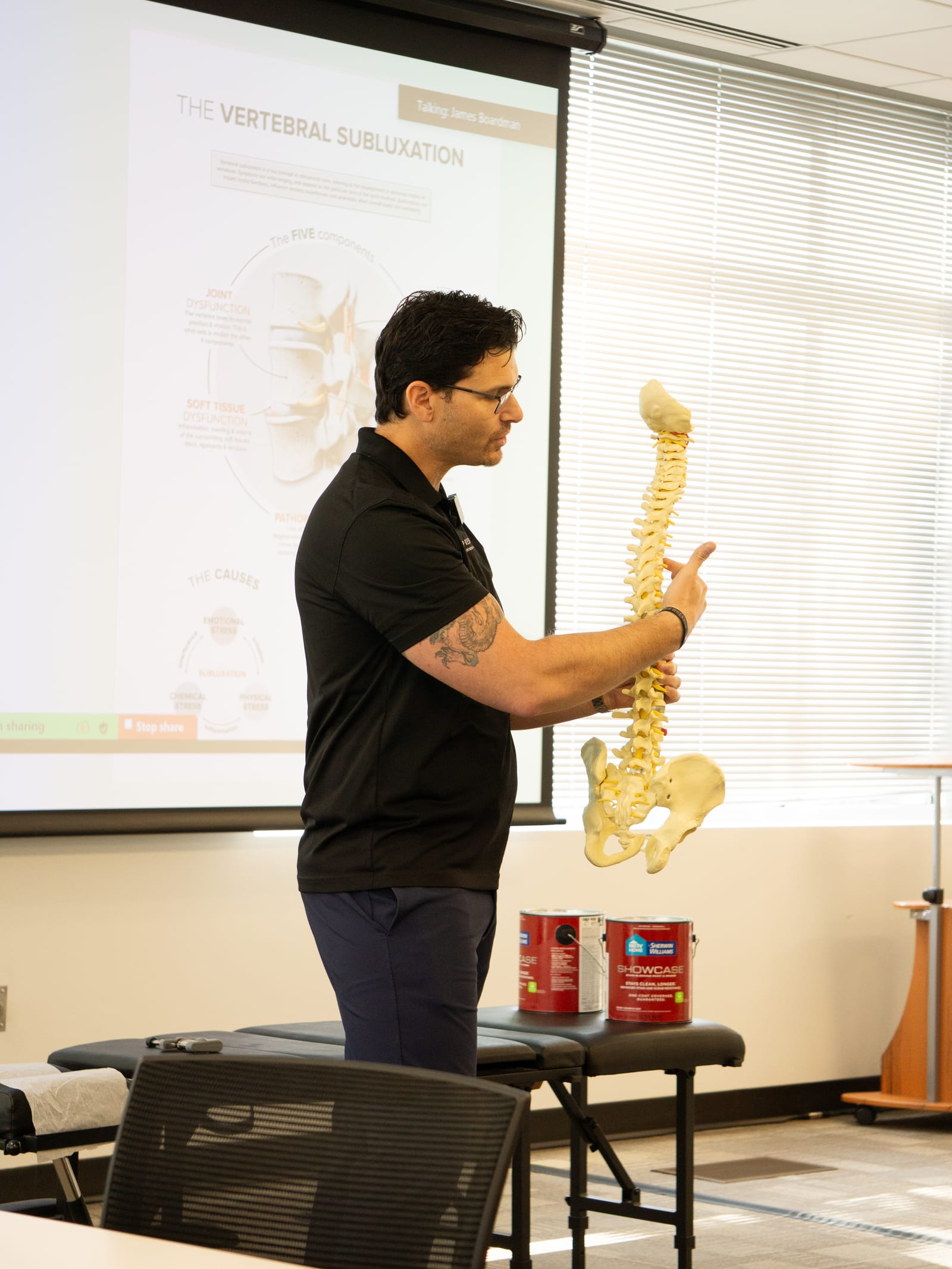
A chiropractor holds a Doctor of Chiropractic degree, which is a four year postgraduate programme in an accredited college following undergraduate study. It is a doctorate and it is a licensed profession in all fifty states. It is not a medical degree, and a chiropractor is not a physician: they do not prescribe medication and they do not perform surgery.
Whether it works is the better question, and the honest answer has a shape. The evidence is strongest for musculoskeletal complaints, and low back pain is the most studied of them. It is weaker, thinner, or absent for claims outside that, and any practice telling you otherwise is overselling.
The part that decides whether it works for you specifically is not the profession, it is whether the plan is measured. Care that never re-measures anything cannot tell you whether it worked, which is why people end up two years in with no idea what changed.
What the training actually is
Dr. Ron Martin trained at Palmer College of Chiropractic and has been in practice since 2011. Palmer is the oldest chiropractic college in the United States.
The curriculum covers anatomy, physiology, diagnosis, radiology and biomechanics, and licensure requires passing national board examinations.
What it does not include is prescribing authority or surgical training. If your case needs either of those, the right answer is a referral, and that is what you should get.
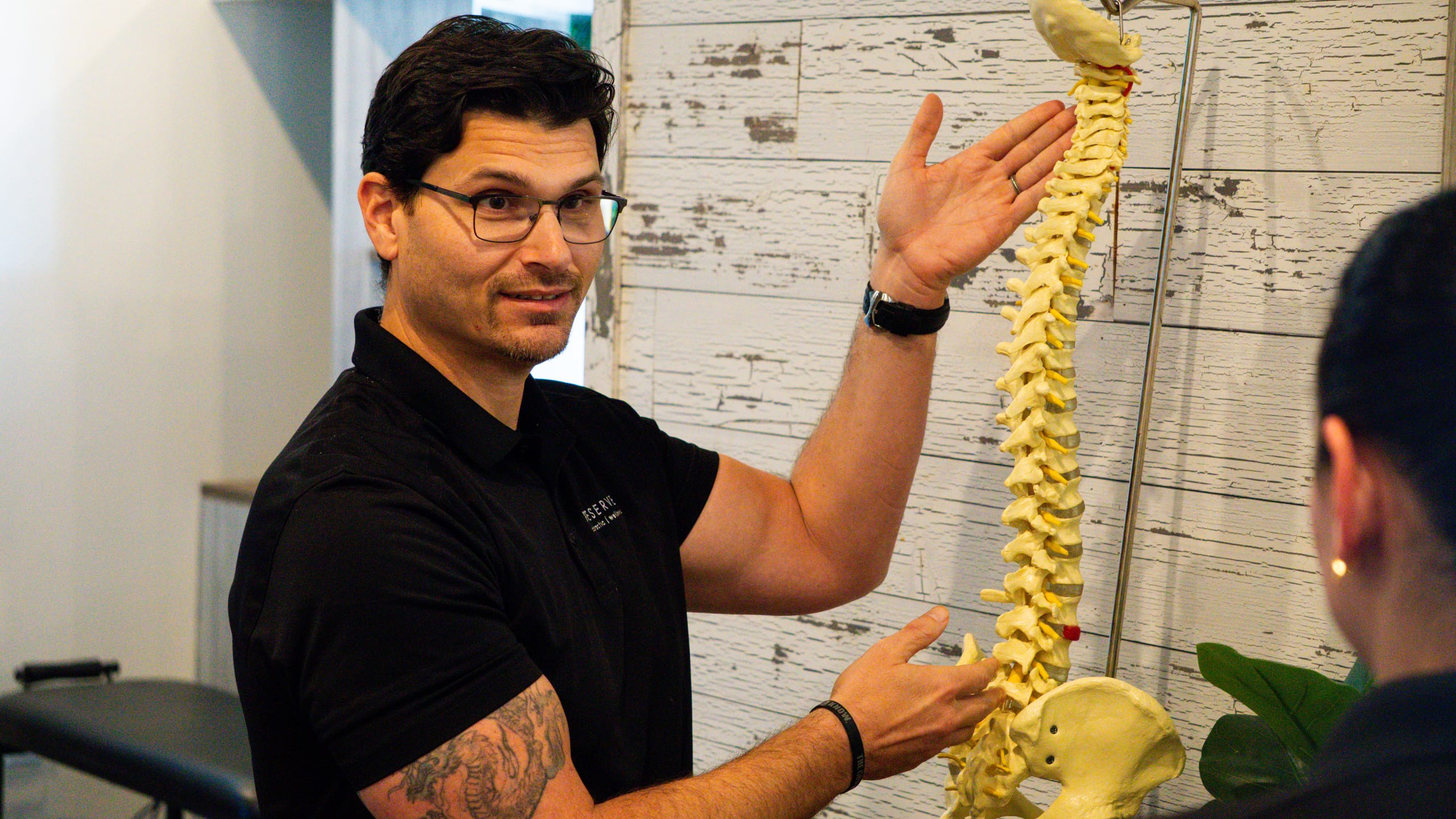
Mechanical low back pain, neck pain, and the mid back and postural patterns that sit behind a lot of both.
Tendon and soft tissue problems, which is where the regenerative equipment comes in rather than the adjustment.
Headaches that start in the neck and track with tension are worth imaging. Headaches that do not fit that pattern are worth sending elsewhere, and a good practice will tell you which yours is.
Where to be sceptical, including with us
Any claim that a result is permanent. Bodies keep loading, and nobody can promise a correction holds forever on its own.
Any plan with no stated number of visits, no scheduled re-exam, and no defined end to the corrective phase.
Any practice that adjusts you on the first visit before anything has been imaged or examined, then tells you what is wrong afterwards.
Any suggestion that chiropractic treats conditions unrelated to the musculoskeletal system.
How to tell quickly
Ask what is going to be measured and when. A practice that is confident in the work will give you a specific answer, because it has to stand behind the re-exam.
Ask what happens when the corrective phase is finished. If there is no answer to that, there is no corrective phase, there is just care.
When you want it answered for your own case
A phone call costs nothing and the office will tell you on the phone whether coming in is worth your time. Nobody is going to pretend every problem belongs here.
- Mon
- 8 to 12pm, 2 to 6pm
- Tue
- 2 to 6pm
- Wed
- 8 to 12pm, 2 to 6pm
- Thu
- 2 to 6pm
- Fri
- 8 to 12pm
15989 Preserve Marketplace Blvd, Odessa, FL 33556