
Low Back Pain in Odessa, FL
Getting out of the car, lifting a grandchild, and sitting through a full workday without planning the day around your back.
The one that makes getting out of the car a decision. Often structural, often blamed on a mattress for years.
- 4.9 from 248Google reviews
- Plan and priceIn writing before you commit
- Cash payHSA, FSA and Care Credit
Sound familiar
“my lower back is killing me”
8 quick questions about your own week, one at a time, and you get a score out of 100 and one next step. It takes about a minute. Nothing is collected and nothing is sent anywhere.
The part nobody explained
Treating the spot that hurts gives you a week of relief and then hands the problem back, because the segment driving it sits somewhere else.
Low back pain that has been there for years is usually a structural pattern rather than an event, so rest changes nothing: the load comes back the moment you stand up.
Soft tissue that has been compensating for months does not release on its own once the structure is corrected, which is why correction alone can stall.
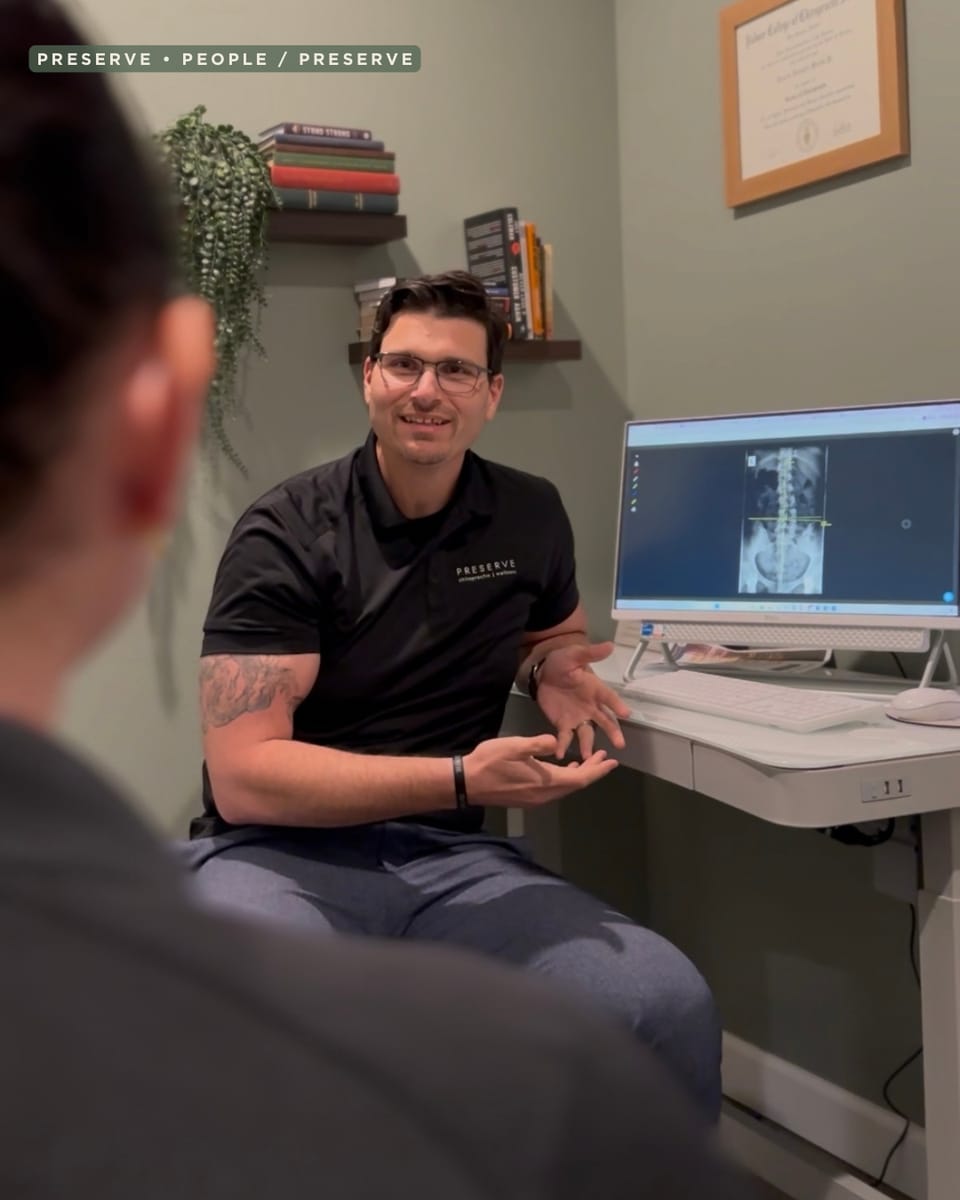
We look before we touch
Digital X-ray taken here on your first visit, read with you on the screen. We are looking at the position of the lumbar segments, the curve through the low back, and whether what the image shows accounts for where you actually feel it. If it does not, you get told that.
The first visit is the exam and the digital X-ray. Nothing is adjusted on it, because adjusting before looking is guessing. What the care itself costs is given to you in writing at the report of findings, before you decide.
What we would use on it
Which of these applies to your case comes out of the exam rather than off this page.
Two phases, and you are told which one you are in
Whatever is driving your low back pain, the shape of care here is the same and you are told which phase you are in the whole way through.
- Phase one
Correct what is driving it
Scoped before it starts. You are told how many visits it is built around, what is being measured, and when the re-exam happens, and you get that in writing with the price at the report of findings.
- The exam and the digital X-ray come first, so the plan answers to findings.
- A scheduled re-exam measures it rather than asking how your week went.
- When this phase is finished, you are told that it is finished.
- Phase two
Preserve what has been corrected
A body keeps loading, so a correction is something you keep rather than something you finish. What maintaining it looks like is explained with the reasons on the table, and it is a decision you make knowing what it is for.
- Discussed once the corrective phase is measured, not assumed at the start.
- You know what you are paying for and why, at every point.
- Nobody here will tell you a result holds forever on its own.
What patients said afterwards
The entire staff is so kind, welcoming, and truly cares about their patients.
Gabriela V., WebsiteHands-down best Chiropractic office I've ever been to.
James B., WebsiteFinding this office has been life changing for me.
Krista R., Website
Questions people ask about low back pain
Will I get adjusted on the first visit?
No, and the reason matters. The first visit is the exam and the digital X-ray. Adjusting a low back before anyone has looked at it is guessing. You come back for the report of findings, where you see the images, hear what is driving it, and get the plan and the price in writing before you decide anything.
How many visits is this going to take?
You get a number before you pay for a plan, not after. The corrective phase has a defined scope written down, and a scheduled re-exam that measures whether it moved. When that phase is done you are told it is done, and what keeping it that way looks like.
Do you take my insurance?
Not directly, and the reason is the point. Billing insurance means an insurer decides how many visits you are allowed and what counts as necessary, and it means the number is an estimate until a bill turns up months later. Paying the practice directly keeps that decision between you and your chiropractor, and it is why the plan and its price are put in writing before you agree to anything. HSA and FSA cards are accepted, and Care Credit is available.
What if the X-ray shows this is not something you can treat?
Then you hear that on the report of findings, and you are told where to go instead. An exam that ends in a referral is still the right answer to have paid for.